Field Notes · Leadership & Growth · October 8, 2026 · 4 min read
A Road Past the Hut
He spent ten years in a mountain hut with almost nothing. Then a road came through, and people started climbing up to find him.
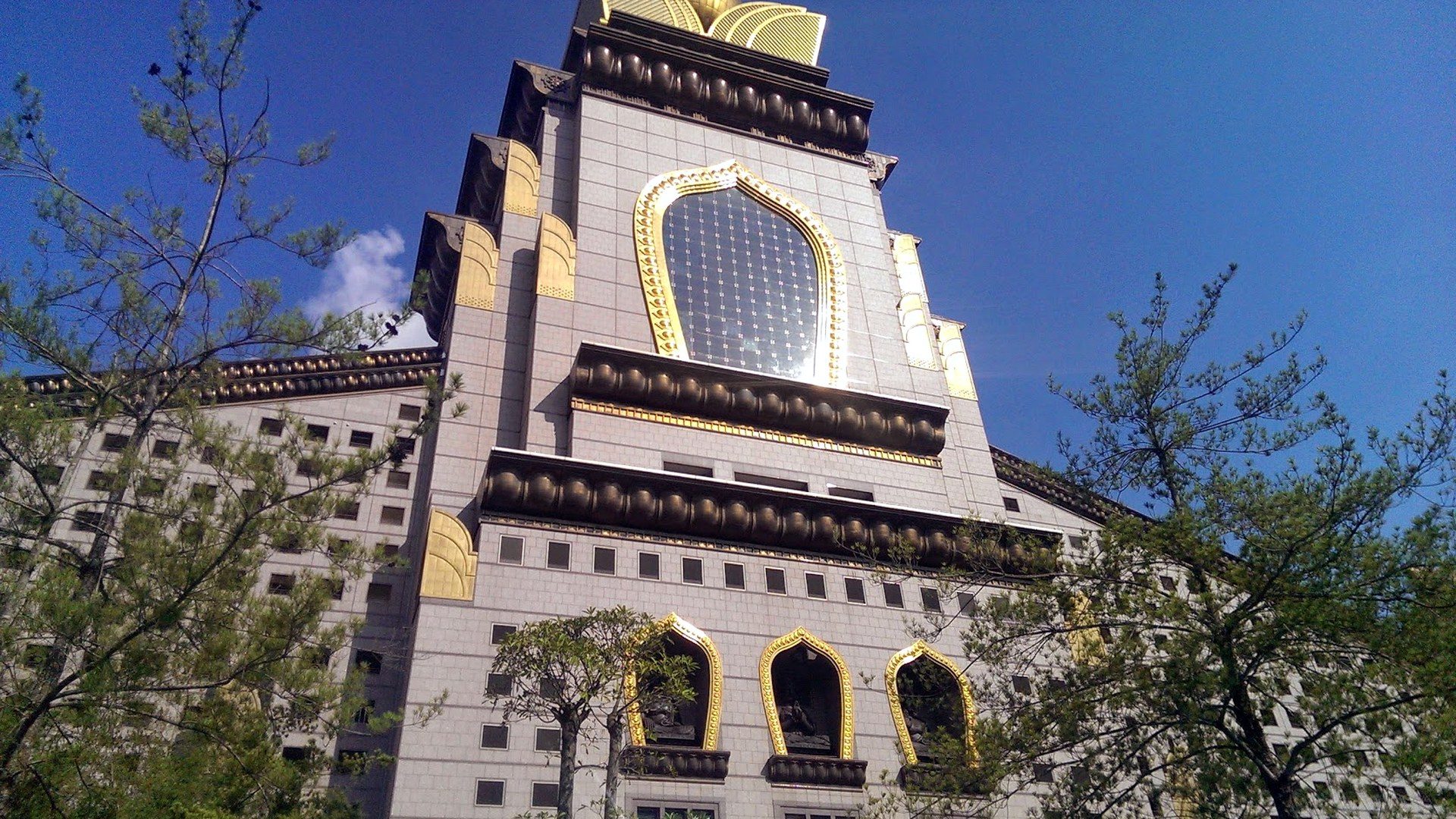
Today is Grand Master WeiChueh's birthday. He was born in 1928 in Yingshan County, in Sichuan, and every October I find myself thinking less about the monastery he built than about the years before anyone knew where to find him.
I've practiced at Buddha Mind Monastery in Oklahoma City since 2013. It is one small branch of a tree whose trunk is Chung Tai Chan Monastery, the enormous temple in Puli, in central Taiwan. When I walked its halls for the first time, I understood the scale of what he left behind. One piece of art hanging in those halls has stayed with me ever since. As I remember it, it was a large work about the sound of a bell: people turning, looking around and upward, each of them caught in the moment of hearing it. I loved it right away. Yet for all that grandeur, almost none of it seems to have been planned.
The question that came first
As a young man he studied the Confucian classics, the way an educated boy in that place and time was expected to. The accounts kept by his own community say the learning left something unanswered. It could teach him how to live well among people. It couldn't tell him what to make of the fact that everyone he knew would die.
That question went with him a long way from Sichuan. He crossed to Taiwan by boat, in years when war was uprooting a great many people from their homes. In the early 1960s he was ordained at Shifang Dajue Chan Monastery in Keelung under Venerable Master Lingyuan, a Dharma heir of the great Chan master Xuyun. His full ordination followed a few years later.
The stories of him as a novice are small ones, and I love them for that. He rose before dawn to sweep the Buddha hall and the courtyard. When the others went to rest, he stayed behind to bow. Nothing about it would have looked remarkable to anyone passing through. It was simply what he did each day.
Ten years of almost nothing
Then he left. For more than a decade he practiced in seclusion, moving between temples in Yilan and Hsinchu, and for a time on Lantau Island in Hong Kong. Eventually he settled in a single hut in the mountains of Wanli, north of Taipei, where he lived with almost nothing and gave himself completely to meditation.
I think about those years often, especially on days when my own practice feels thin. Ten years is long enough for the world to forget you. There was no audience, no plan for a monastery, no sense that any of it was leading anywhere. There was the hut, the cushion, and the question he had carried since Sichuan.
Then the road came
In the mid-1980s, an industrial road was cut through those mountains, and it happened to pass near his hut. Suddenly a place that had been hard to reach was easy to find. People began to come. Some came out of curiosity, and some came because they had heard there was a monk up there worth listening to. They asked him to teach, and he agreed.
He didn't go down the mountain looking for followers. The road brought them up to him.
By 1987 there were four monastics and around 300 lay students gathered around him, and they decided to build. They didn't hire it out. They cleared the ground themselves, carried the bricks by hand, and raised the walls of Lingquan Monastery on the very spot where his hut had stood. Soon he was leading Chan-7 retreats, seven days of intensive sitting, and in 1991 he led seven of them back to back, forty-nine days in all.
Lingquan filled faster than it could hold. So he planned something larger. After three years of planning and seven of construction, Chung Tai Chan Monastery opened in Puli in September 2001. Along the way, he set out to establish meditation centers across Taiwan and abroad. One of them is the monastery in Oklahoma City where I first learned to sit.
What remains
When he died on April 8, 2016, he had ordained around two thousand monastics, and nearly 30,000 people came to his memorial. Those numbers are real. But they aren't the part of the story I hold closest.
What I hold is the hut. A man sweeping a courtyard before anyone was awake. Ten years of practice that nobody saw. A road that happened to come by. And a decision, when people finally climbed up the mountain, to say yes.
So much of what we build in this life is an effort to be found. His life suggests another way: do the quiet work so thoroughly that when the road arrives, there is something real waiting at the end of it.
Maybe that's why the bell has stayed with me. Hearing it is the easy part. It's the years of practice that teach you to turn toward the sound.
Happy birthday, Grand Master. Thank you for the hut, and for everything that grew where it stood.
Resonance arrives November 10, 2026. Join the early list for cover reveals, excerpts, and release-day news.
Join the early list