Field Notes · September 4, 2026 · 3 min read
The Woman at the Fair
He almost quit. Then a stranger put her arms around him next to the corn stand, and he never learned her name.
He had no intention of doing it again.
The first event had been, in his words, “an absolute horror disaster.”
He and one other tattoo artist had opened the doors and offered free cover-ups to people carrying hate symbols, gang affiliations, and other markings they no longer wanted on their bodies. The need was real. The plan was not.
He tattooed until four in the morning. There was no reliable process for determining which tattoos qualified. Looking back, he was fairly certain he had covered some bad tattoos that had nothing to do with hate or gangs at all.
It was chaotic, exhausting, and, by his own accounting, mostly a failure.
They had tried. It had not worked. He could live with that.
Then he went to the county fair.
He was near the building where they sell corn, trying to get up the stairs, when a woman he did not recognize came out of the crowd and wrapped her arms around him.
She was crying.
He was mostly worried about getting corn on her.
“You changed my husband’s life,” she told him. His children no longer saw him as a monster. He had been able to move up at work. He could go to the gym and take off his shirt.
“You just changed his whole life.”
He never learned her name.
He never learned her husband’s name either, and he could not match the story to any face he remembered working on. The proof that the event had mattered arrived without a name, an application number, or a before-and-after photograph.
It arrived as a woman crying beside a corn stand.
That is the part of impact we rarely know how to measure.
We count the people who came through the door. We count the hours, the volunteers, the money spent, and the work completed. Those numbers tell us whether something happened. They do not always tell us what happened afterward.
An old mark had disappeared beneath new ink. Because of it, a father moved differently through his own home. His children looked at him differently. His employer saw something in him that could move forward. He could take off his shirt without making his past the first thing everyone else saw.
None of that had been visible from inside the first event.
The woman made it visible.
“Whoever she was, she completely saved the whole thing,” he said. If the work had changed one person’s life that completely, quitting no longer felt like an option. He felt obligated to continue.
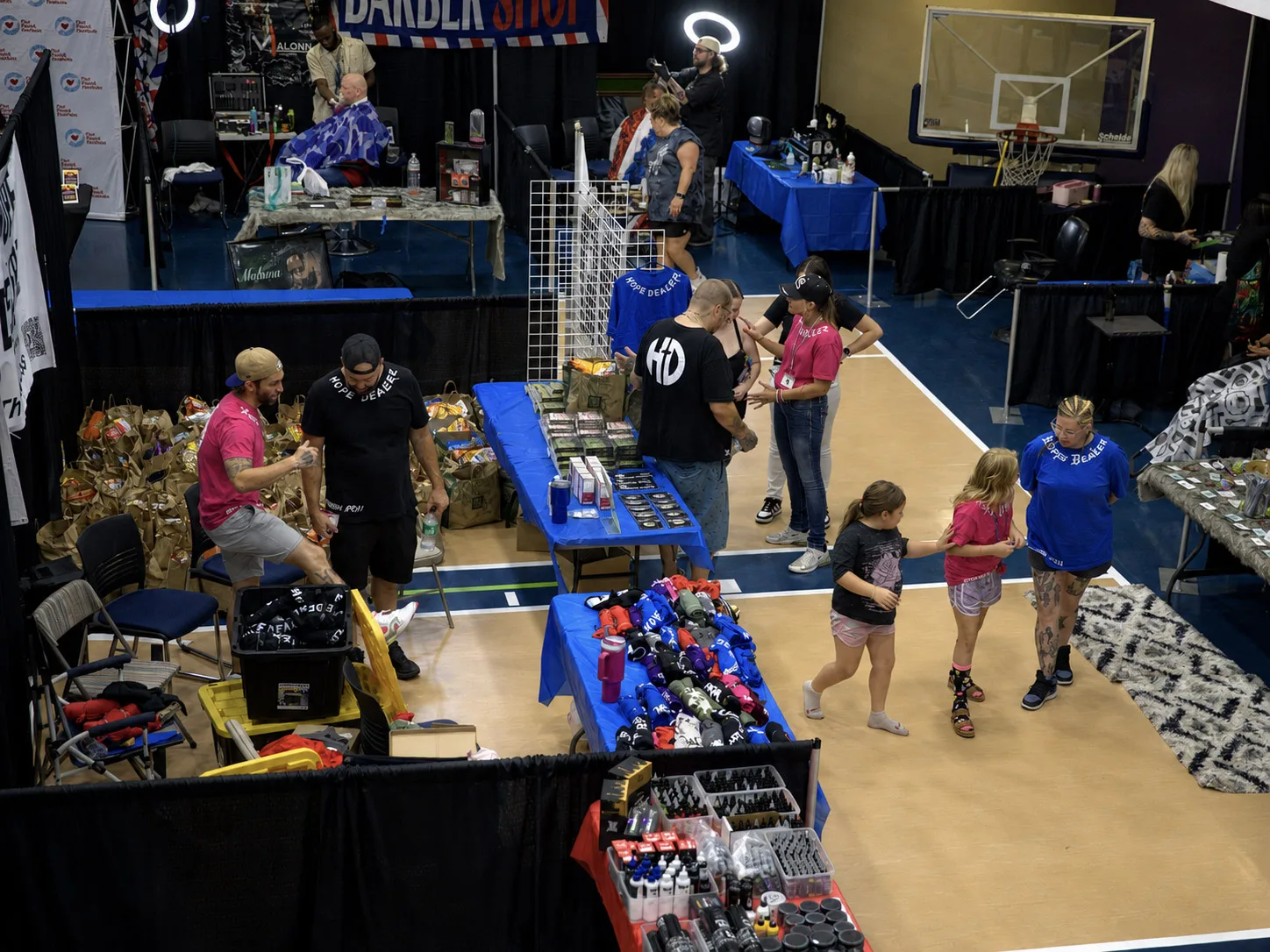
Years later, people begin lining up the night before the doors open. Volunteer artists drive in from across Oklahoma and Texas, reschedule paying clients, and bring their own equipment and supplies. At the most recent event, nineteen artists covered sixty-five hate, gang, and racially charged tattoos for forty-one people in a single day.
The event grew into a gymnasium full of tattoo stations, community partners, food, a blood drive, and people who might never otherwise have sat in the same room. All of it can be traced back through the years to one stranger who stopped a man at a fair and told him what his work had done.
She thought she was thanking him.
She was also saving the work that had helped her family.
He changed a life without ever knowing whose it was. She changed the future of something without knowing it was in danger of ending.
Sometimes the evidence that our work matters does not arrive in a report. Sometimes it finds us beside the corn stand, puts its arms around us, and asks us not to quit.
This story grew from my reporting on Stop the Hate in the 918 for Resonance: The Quiet Revolution of Compassion. In an earlier field note from Sand Springs, I wrote about the distance between punishment and transformation, and the people who help close it. Read “Punishment Doesn’t Teach What We Think It Does”.
Resonance publishes November 10, 2026. Learn more about the book and join the early list.
Resonance arrives November 10, 2026. Join the early list for cover reveals, excerpts, and release-day news.
Join the early list