Storytelling & Communication · September 29, 2026 · 4 min read
The Word That Matters Most Is Choose
A photographer knows a picture is mostly what you leave out. On the sentence at the heart of my work, the word inside it that matters most, and what practice taught me about choosing.
There's a sentence on my About page that I've used for years: the stories we choose to tell shape the world we create. I'll be honest. It's the kind of line you've probably read a hundred versions of. Stories shape us, stories matter, stories change the world. You nod and scroll past.
So this week I made myself slow down and look at it one word at a time, the way I'd look at a contact sheet. And the word I kept coming back to was choose.
Every photographer knows that a picture is mostly what you leave out. You decide where the frame ends. You decide which of the forty frames makes the cut, and what caption sits underneath it. Nothing about that is neutral, even when every single image is true.
I watched this happen with my own book. The excerpt of Fields of Resilience on my website used to open with wildlife: a weaver bird building its nest, a giraffe crossing the savanna. Beautiful photographs, and every one of them belongs in the book. But someone skimming those first pages would reasonably think they'd found a safari book.
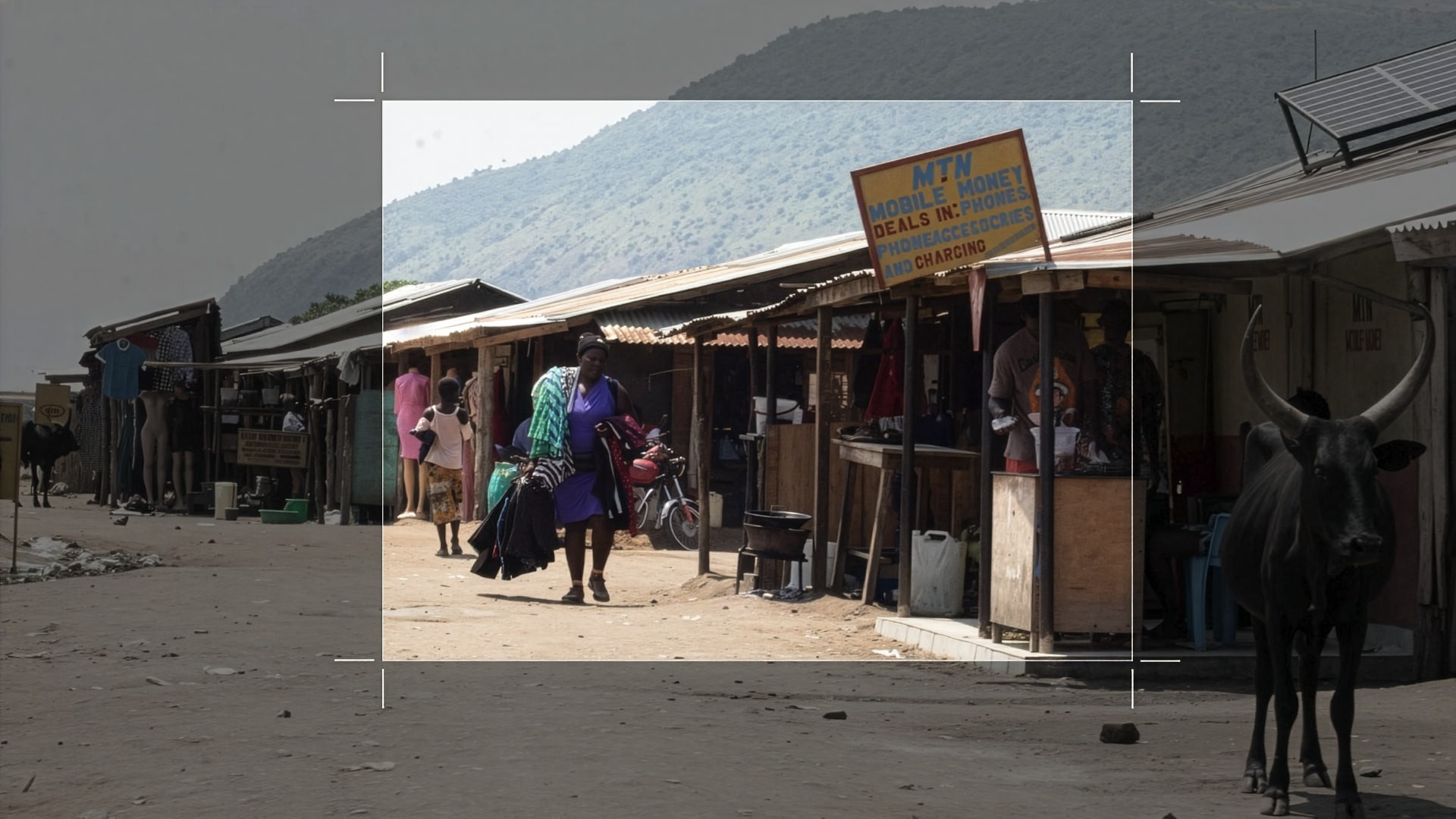
When I rebuilt the excerpt, I changed nothing about the book itself. The same 98 pages. I simply chose a different door into it: a market street in rural Uganda, the farmers, the families, the work of Agri Planet Africa. The giraffe is still there, but now it arrives inside the world of the people who live alongside it. Same truth, different choice, and a reader leaves believing something different about Uganda.
That's the whole sentence in miniature.
The bolder half
The second half of the line, shape the world we create, makes a bigger claim, and it's the one I've come to believe most.
Stories aren't just descriptions we write after something happens. They set the terms for what comes next. They tell people what's possible, who is worth listening to, what counts as normal. If the only stories anyone hears about Uganda are about poverty or wildlife, people act on that. They give differently. They travel differently. They picture a whole country as either a problem or a postcard. The same is true much closer to home. If the only stories told about rural Oklahoma are about decline, people start making decisions as if decline is the only option.
Resonance, which comes out November 10, is really an argument built on this idea. The news is full of stories about what's breaking, and I don't dismiss them. But I went looking for the other ones. Todd Heilman, rebuilding his wildlife sanctuary in Old Mines, Missouri, after an EF3 tornado made a direct hit and destroyed nearly everything he'd built, with neighbors and strangers showing up to help. Jamy Magee and the artists at Stop the Hate in the 918, who spend one day a year in Sand Springs covering hate and gang tattoos for free.
Jamy's event is almost a literal version of my sentence. Someone's old story is written on their skin, sometimes from a chapter of their life they'd give anything to close. An artist sits down with them and, line by line, covers it with something new. The person walks out and the world they move through has changed. Job interviews go differently. The way strangers look at them goes differently. The way they see themselves in the mirror goes differently.
One of the men there said it better than I could, almost as an aside: “The great thing about choices—we can change our mind anytime.” A different story, chosen on purpose, and a different life gets to follow.
Where this comes from for me
I didn't set out to connect this to my Buddhist practice, but I can't pretend the connection isn't there.
In the Platform Sutra, the teachings of Huineng, the Sixth Patriarch of Chan, there's a line I keep returning to. He says that when we see evil or virtue in people without any grasping or rejection, the mind becomes like empty space, wide enough to hold everything. A little earlier he puts it even more simply: all dharmas are intrinsic to the mind. How we see is part of what we see.
For someone whose craft is choosing, that stopped me. I can't stop deciding where the frame ends. But there's a difference between choosing what goes in the frame and deciding in advance who a person is. The first is my job. The second is the thing I'm trying to unlearn.
Later in the same chapter, Huineng writes that true cultivators of the Way seek not the faults of others. Almost everyone in Resonance had already been summed up by somebody, sometimes by a tattoo they got at nineteen and have been explaining ever since. My work was to leave room for the rest of them.
Maybe that's the real practice: not refusing to choose, but choosing awake.
The responsibility in the frame
What all of this leaves me with is less a slogan than a responsibility.
Every time I lift a camera or sit across from someone to hear their story, I'm making choices on their behalf and on behalf of whoever eventually reads it. Where does the frame end? Whose voice comes first? Which moment makes the cut, and which one gets left out?
I won't always choose well. But I'd rather know I'm choosing than pretend the camera is neutral.
So the next time you read a story, or tell one, it might be worth asking the same thing I'm asking myself: what was chosen here, and what world does that choice help build?
Resonance arrives November 10, 2026. Join the early list for cover reveals, excerpts, and release-day news.
Join the early list