Leadership & Growth · Storytelling & Communication · October 15, 2026 · 4 min read
You Can Hear Every Word and Still Miss the Meaning
The meeting was set for 10:00 a.m., and everyone agreed. I heard every word. It took me two hours, and a phrase called mazungu time, to understand what they meant.
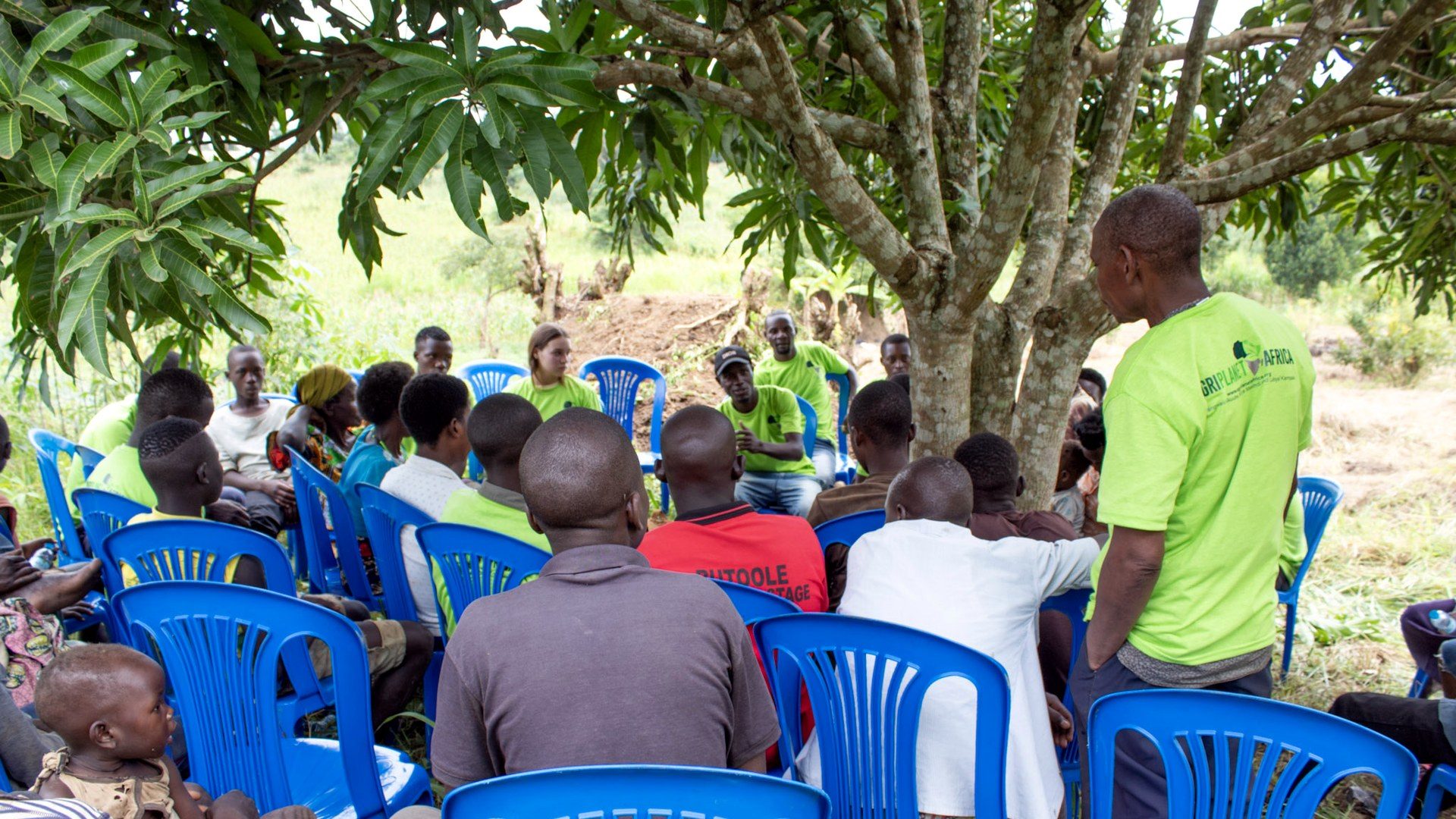
The meeting was set for 10:00 a.m. Everyone had agreed to it. I had heard them agree.
This was early in my work in Uganda, at Kyangwali. I was there on time, a little proud of being organized, and I passed the wait talking with residents and missionaries. Ten o'clock passed. Then eleven. People began to arrive closer to noon, some later, unhurried and warm, as if nothing at all had gone wrong.
To me, something had. I read it as lateness, and if I'm honest, I read it as a small disrespect. I had been told 10:00 a.m. I had understood every word. And I was sure I knew what those words meant.
The words were the easy part
It took me an embarrassingly long time to learn a phrase that undid the whole thing: mazungu time. It's a gentle joke about foreigners, the way we treat the clock as something close to sacred. Our schedules are rigid. A minute late is a minute lost.
The anthropologist Edward T. Hall had a name for my way of seeing it: monochronic time, where one thing happens at a time and the schedule rules. What I was standing in was closer to what he called polychronic time, where several things move at once and relationships come first. If someone was in the middle of a conversation that mattered, that conversation came first. Walking away from it to honor a number on a clock would have been the rude thing.
No one had lied to me. "Ten o'clock" was true. It just wasn't a promise about the clock. It was closer to an intention, held loosely inside a day where people came first. I had heard every word and missed what they were carrying.
What rides underneath
I think about that meeting a lot, because the misunderstanding wasn't really about Uganda. It was about me assuming that the literal words were the whole message.
They almost never are. Beneath every sentence runs a second layer, and it carries most of the meaning: who is speaking to whom, and what's at stake between them. What happened the last time they talked. Who holds power in the room. What can be said directly and what has to be said sideways. What a silence means. And what each person simply considers normal, so normal they would never think to explain it.
When those layers line up, communication feels effortless, and we give the words all the credit. When they don't, we blame the other person for being unclear, or late, or difficult. Rarely do we suspect our own assumptions about what's normal.
It doesn't take a passport
It would be easy to file all this under international travel. But some of my sharpest lessons came a few miles from home.
When I first walked into Buddha Mind Monastery in Oklahoma City, I didn't know when to bow or where to sit. Everyone spoke English. I understood every word of the instructions. What I didn't understand was the meaning folded inside them: the reasons behind the forms, the respect a small gesture carried, the difference between being told what to do and understanding why it mattered. It was another culture, in my own city, in my own language.
The same thing happens in workplaces, where one team hears "we'll circle back" as a promise and another hears it as a polite no. It happens in families, where "I'm fine" can mean a dozen different things depending on who says it and how. Cross-cultural communication isn't only what happens at a border. It happens anytime two people bring a different sense of normal into the same conversation, which is to say, almost always.
Working on Resonance, I learned this again and again, often before a single word was spoken. Driving up to one man's property, past dolls hung deliberately in the trees, I wrote later: "Before I had even reached him, I had already been given every visual reason to decide who he was." The story I would have told from that driveway was nothing like the one he told me.
Spotlight and floodlight
I've written before about two kinds of attention: the narrow spotlight that makes one thing sharp, and the wide floodlight that shows the whole field around it. And I've written about how a stereotype is a spotlight, lighting one true fragment of a person and leaving the rest in the dark.
Words are a spotlight too. They are the bright, clear part, easy to quote back and easy to hold someone to. But the meaning lives in the field around them: the relationship, the history, the timing, the room. Listen only to the spotlight and you can be perfectly accurate and completely wrong.
That's what happened to me at ten o'clock. I was so focused on the time that had been said that I missed what the day was actually about.
What I try to do now
I haven't stopped noticing the clock. I still arrive on time, and I probably always will. But I try to hold my first interpretation a little more loosely.
When I feel that flash of irritation, I treat it as information about my own assumptions, not proof about someone else's character. I ask what's normal here before I decide something is wrong. And when the words seem clear but something still feels off, I've learned to ask a simple question: what did that mean to you?
Resonance closes with a section I called "What I Learned," and its opening lines still describe this better than I can: "I went into this thinking I was collecting other people's stories. I came out having a few of my own assumptions quietly taken apart."
That's what a 10:00 a.m. meeting taught me, two hours before anyone arrived. Hearing is only the beginning. Understanding asks us to look at everything the words are standing in.
Resonance arrives November 10, 2026. Join the early list for cover reveals, excerpts, and release-day news.
Join the early list