Storytelling & Communication · September 17, 2026 · 6 min read
What Happens When We Let People Tell Their Own Stories?
A person may have spoken, but that does not mean we allowed them to tell their own story. Honest storytelling begins when we loosen our grip on the narrative we expected and leave room for a life to complicate it.
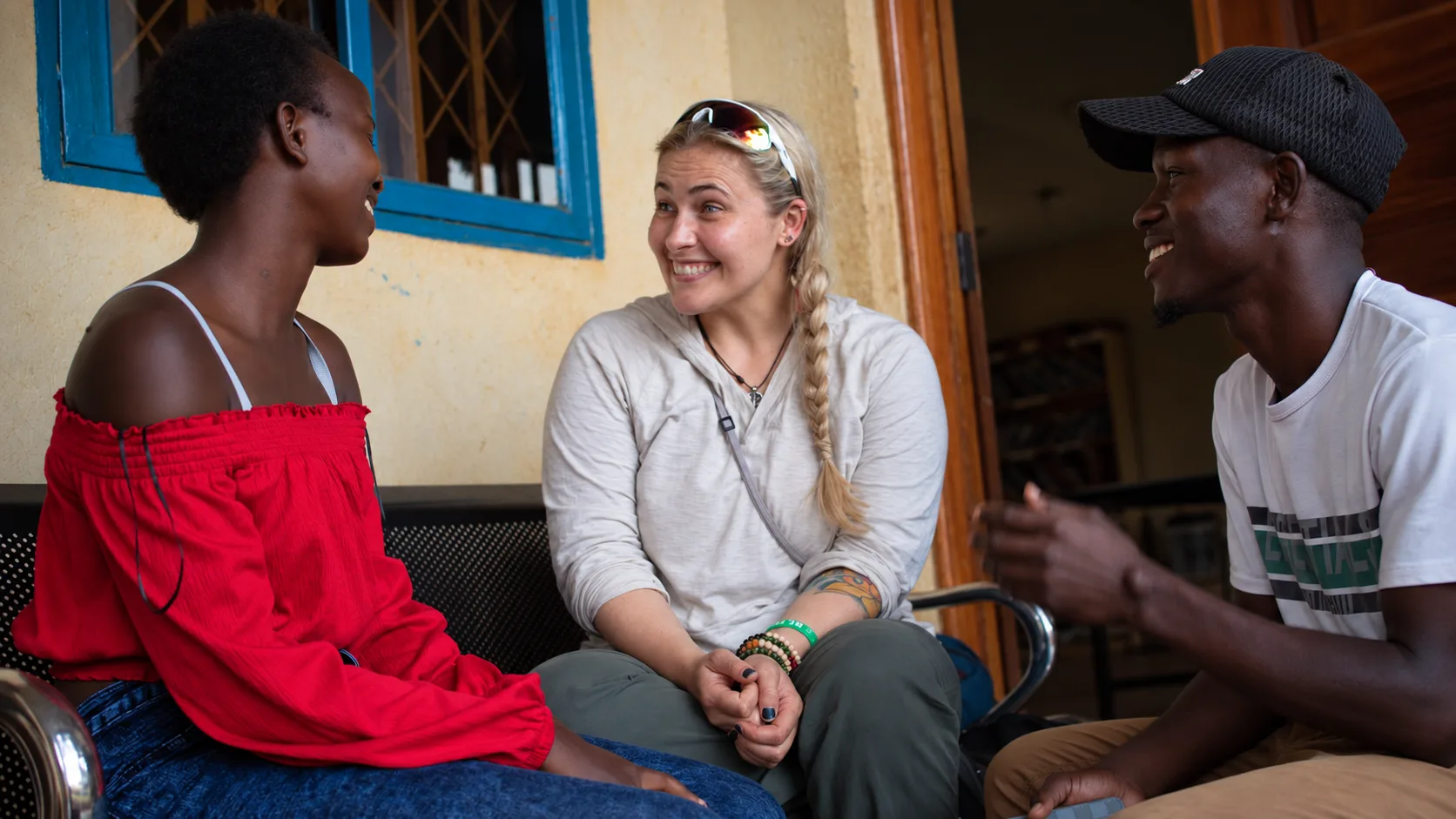
I learned early in journalism that an interview can look like listening while being something else entirely.
A reporter arrives with a theory. The questions are written to support it. The most convenient sentences are pulled forward. Anything that complicates the story is trimmed away.
The person may have spoken, but the story was decided before they opened their mouth.
This does not always happen because a journalist is careless or dishonest. Often, it begins with something more ordinary: the desire to make a complicated life understandable.
Stories need shape. Readers need context. Editors need clarity. But there is a point at which clarity becomes reduction, and a human being is made to fit inside an idea that was never large enough to hold them.
The work is not simply to give people a voice. Most people already have one.
The work is to stop speaking over it.
The Question Behind the Question
Every interview contains two stories.
There is the story the interviewer expects to hear, and there is the story the person is actually trying to tell.
Sometimes they are close. Sometimes they are not.
A journalist might arrive expecting a story about hardship and hear one about expertise. A photographer might look for resilience and find anger. Someone seeking common ground might discover a difference that cannot be neatly resolved.
That moment of divergence matters.
It is tempting to guide the conversation back toward the original idea. The reporter has done the research. The assignment has already been framed. A headline may even be forming.
But the unexpected answer is often where the real reporting begins.
A good interview is not a search for the sentence we hoped someone would say. It is an encounter with what we did not already know.
That requires questions broad enough to leave room for surprise:
What do people misunderstand about your life?
What would you want someone outside this community to know?
What part of this story are people not seeing?
What have I failed to ask?
These questions do not guarantee that we will understand someone correctly. They do, however, loosen our grip on the version of them we brought into the room.
Listening Without Translating Too Quickly
Cross-cultural communication is often discussed as if it only happens across national borders. It happens there, certainly, but culture is also shaped by region, religion, race, profession, age, class, disability, family, politics and experience.
Two people can share a language and still assign very different meanings to the same words.
They can live in the same town and inhabit different worlds.
This is where storytelling becomes especially delicate. When someone describes a life unfamiliar to us, we naturally translate it through what we already know. Translation is necessary. It is how understanding begins.
But it can also distort.
We hear a practice and decide whether it is modern or traditional. We hear a decision and label it brave, tragic or misguided. We recognize something that resembles our own experience and quickly announce that, underneath it all, we are the same.
Usually, that is meant kindly.
But “we are all the same” can be another way of avoiding what someone has actually told us.
We share human needs. We do not share identical histories, risks, freedoms or ways of moving through the world. Connection does not require us to erase those differences.
Sometimes respect sounds less like “I know exactly how you feel” and more like “I believe you when you tell me this is different.”
Understanding Is Not Agreement
Letting people tell their own stories does not mean surrendering judgment.
Listening is not endorsement. Understanding is not agreement. Accurate representation does not require a writer, photographer or reader to adopt every belief expressed by the person in front of them.
It asks for something more disciplined.
It asks us to understand a position before responding to it.
That distinction matters because we often stop listening the moment we identify a label. Once we believe we know what kind of person is speaking, we begin filling in the rest: what they value, how they vote, whom they love, what they fear and what they must mean.
The label becomes the story.
Journalism should interrupt that reflex. Cross-cultural communication should make us suspicious of it.
A person is not obligated to become agreeable before they are represented accurately. They do not have to resemble us enough to earn complexity.
We can tell the truth about a disagreement without turning the person on the other side of it into a caricature.
The Difference Between Access and Authority
Being invited into someone’s life gives a storyteller access. It does not give the storyteller ownership.
That distinction has shaped the way I approach interviews and documentary work. A camera can capture what happened inside a fraction of a second, but it cannot explain an entire life. A recording can preserve someone’s words, but it cannot decide what those words mean without context.
The storyteller still makes choices.
Where does the story begin? Which details remain? Which image becomes representative? What is left outside the frame?
There is no version of storytelling without selection. The responsibility is not to pretend we are neutral machines. It is to remain aware of the power contained in those choices.
That means checking assumptions. Verifying details. Preserving the distinctions a person says matter. It means resisting the line that is dramatic but misleading and the photograph that is beautiful but untrue.
It also means recognizing that not everything we are trusted with belongs in the finished story.
Being told something is not the same as being given permission to use it.
Sometimes the most ethical editorial decision is an omission—not because the material is unimportant, but because a person’s vulnerability should not become the price of making our work more compelling.
A Story Large Enough for a Person
The strongest stories I have encountered are rarely the cleanest.
They contain contradictions. Someone can be generous and difficult, wounded and joyful, certain about one thing and still becoming someone new in another. A community can carry hardship without wanting hardship to be the only thing anyone sees.
People do not owe us a simple lesson.
They do not exist to demonstrate resilience, confirm a stereotype or deliver a satisfying conclusion. Their lives continue after the interview ends and outside the boundaries of the frame.
The storyteller’s task is not to remove every contradiction. It is to create a structure strong enough to hold the truth of more than one thing at once.
Perhaps that is what changes when we let people tell their own stories.
The distance between observer and subject becomes smaller, but it does not disappear. We remain responsible for how we see, what we select and what we ask the audience to believe.
What changes is that certainty becomes harder.
The easy description begins to feel inadequate. The label loosens. The person in front of us becomes more specific, more complicated and less useful as evidence for whatever we thought we already knew.
That is not a failure of storytelling.
It is the beginning of honest work.
Much of the reporting behind Resonance: The Quiet Revolution of Compassion began in that space: not with an attempt to prove that everyone is the same, but with a willingness to stay long enough for a life to exceed its label.
And then to tell the story from there.
Resonance arrives November 10, 2026. Join the early list for cover reveals, excerpts, and release-day news.
Join the early list